Blanco County Veterans and the Civil War (1861–1865)
Service, Loyalty, and Survival in the Texas Hill Country
Blanco County on the Eve of War
Blanco County was barely three years old when the Civil War began. Organized in 1858, it was a sparsely populated Hill Country county of small farms, ranches, and frontier settlements rather than plantations. This frontier character shaped the military experience of its residents. There were no standing militias headquartered in the county, no major armories, and no forts active during the war. Military service for Blanco County men meant leaving home to join units organized elsewhere in Texas.
Despite its frontier nature, Blanco County’s men of military age were quickly drawn into the conflict through voluntary enlistment and later conscription, placing them into Confederate units serving far from home.
Unionist County, Confederate Soldiers
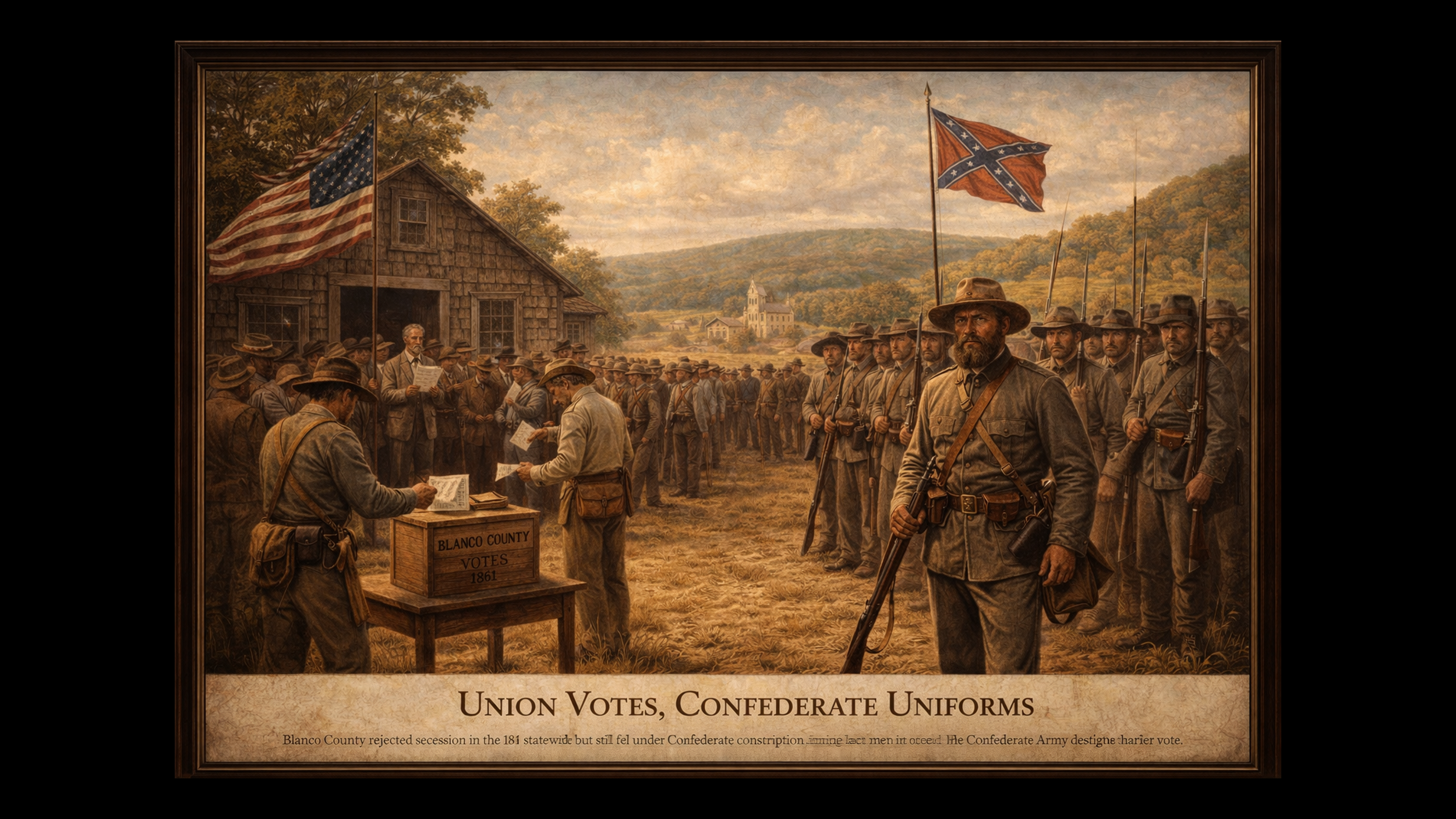
One of the defining aspects of Blanco County’s Civil War experience was its strong Unionist sentiment. In the 1861 secession referendum, Blanco County voters rejected secession, making it one of the few Texas counties to do so by a clear margin.
This vote did not shield its residents from the war. Once Texas formally joined the Confederacy, federal authority disappeared, and Confederate law applied uniformly. Blanco County men were still subject to Confederate conscription, regardless of their personal or political beliefs.
For many veterans from Blanco County, military service was therefore not a reflection of ideological support, but a matter of obligation, survival, and community pressure.
Recruitment and Enlistment
Blanco County did not raise its own named regiment or battalion. Instead, its veterans enlisted through regional recruiting efforts, most commonly in nearby towns such as San Antonio, New Braunfels, and other Central Texas centers.
Blanco County men are documented serving primarily in:
Texas cavalry units, reflecting the county’s ranching culture and horsemanship
Mounted infantry and frontier defense formations
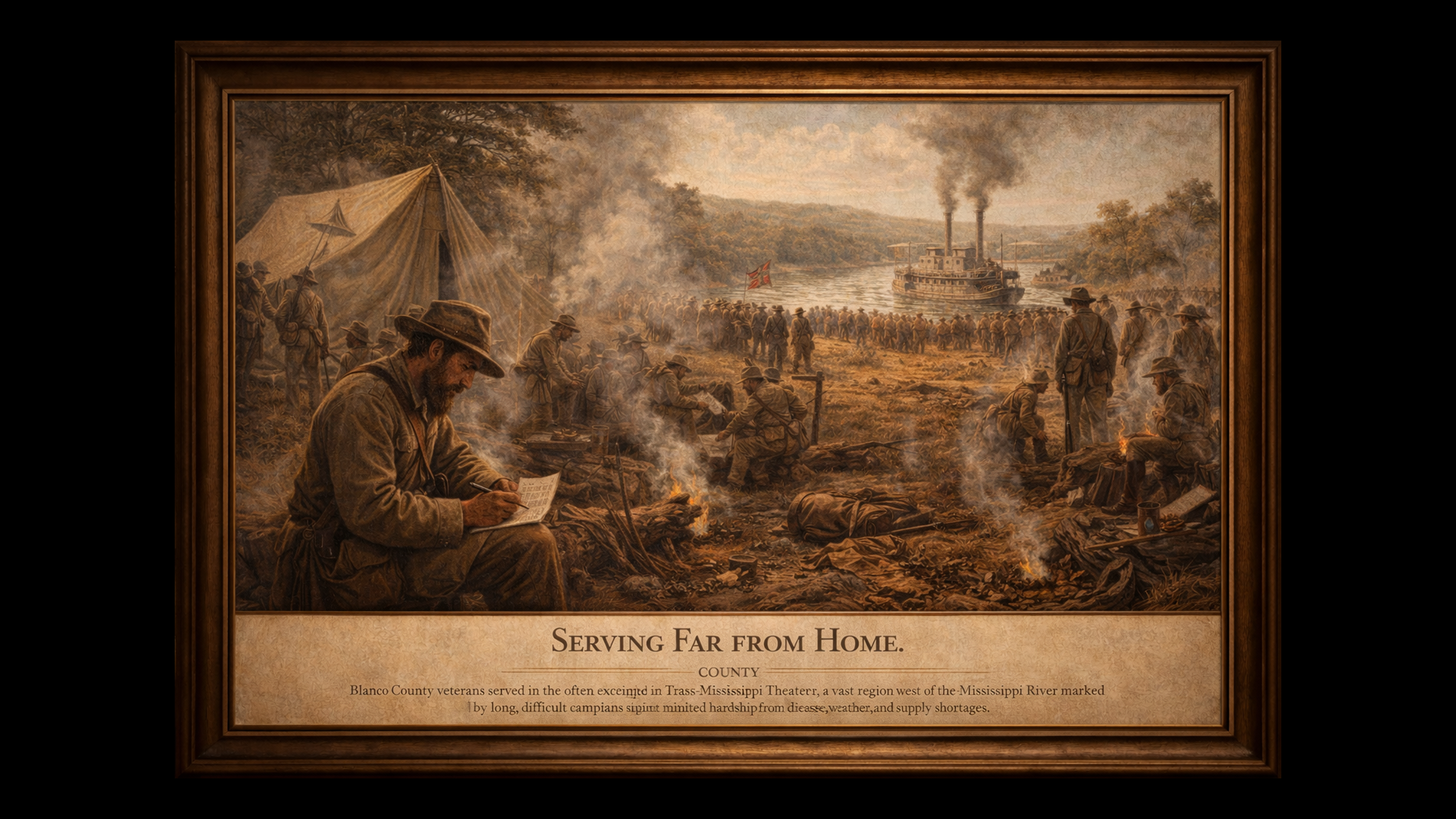
Units assigned to the Trans-Mississippi Theater, the vast western half of the Confederacy
These soldiers were absorbed into existing Texas regiments rather than serving as a distinct “Blanco County” company.
Where Blanco County Veterans Served
Veterans from Blanco County largely served west of the Mississippi River, an area defined by long marches, supply shortages, and limited reinforcement.
Their service commonly included:
Coastal defense and internal security assignments in Texas
Campaigns in Louisiana and Arkansas
Guarding supply routes, prisoners, and frontier settlements
Engagements against Union forces advancing along the Red River and Gulf Coast
Unlike Eastern Theater armies, Blanco County veterans often endured years of hardship with little recognition, fighting far from the major battles remembered today.
Conscription, Resistance, and Internal Conflict
As the war progressed and Confederate manpower declined, conscription enforcement intensified. This had a direct impact on Blanco County veterans and their families.
Some residents:
Entered service unwillingly under the draft
Attempted to avoid conscription through hiding or flight
Were pursued by Confederate authorities and Texas Ranger detachments
These internal conflicts were not battles against Union forces but episodes of civil strife within Texas itself, reflecting the tension between loyalty, coercion, and conscience.
For veterans who served under these conditions, the Civil War was not only a battlefield experience but a deeply personal struggle over obligation and belief.
Casualties and the Cost of Service
Precise casualty figures for Blanco County veterans are difficult to determine due to incomplete Confederate records. However, service rolls, pension applications, and postwar accounts indicate that:
Disease claimed more Blanco County veterans than combat
Long absences weakened farms and ranches at home
Some veterans never returned, while others came home disabled or impoverished
The war’s human cost lingered long after the fighting ended, shaping the county’s veteran population for decades.
Return Home: Veterans After 1865
When the war ended in 1865, Blanco County veterans returned to a county economically weakened and politically transformed. Confederate service offered no pensions until decades later, forcing many veterans to rely on family, neighbors, or continued labor despite injuries.
Former soldiers became:
Ranchers and farmers rebuilding depleted herds
County officials, lawmen, and civic leaders
Participants in veterans’ organizations in later years
Their service, whether voluntary or compelled, became part of Blanco County’s collective memory — complex, often conflicted, but inseparable from the county’s identity.