
Shertz-Cibolo Cemetery
Schertz, Texas
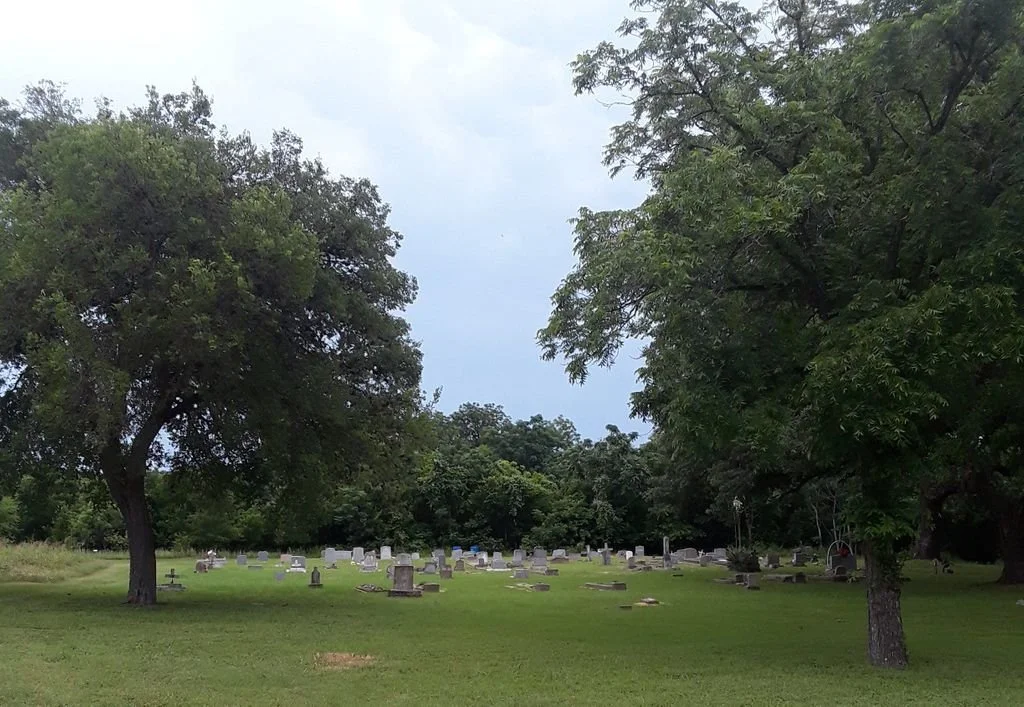
Brothers Ferdinand Michael and Jacob August Dietz arrived in Texas during an immigration wave from Germany in the 1840s and purchased 500 acres of the Genobev Malpaz Survey in Guadalupe County for their farmstead. A later immigration wave from Mexico occurred in the late 1800s, bringing families such as the Arizpe, Del Toro, and Bermea families to work on the Dietz farm. Many of these families came together from the village of Rosales (now Villa Union) in Coahuila. According to oral tradition, the cemetery was established when a farmworker died and there was no place for her to be properly buried. Ferdinand Dietz set aside one acre of his land near the oak trees where workers rested, creating a burial ground on the north side of Cibolo Creek. The cemetery was first officially referenced in a 1908 deed.
The cemetery faces east, and the northeast section was originally designated for infant burials. Many early grave markers are hand-made or hand-etched, with some featuring tile inlay or seashell decorations. Both English and Spanish inscriptions are present. The oldest marked grave is that of Tomas Arizpe, who died in 1925, though evidence indicates earlier burials. In 1973, Ferdinand’s grandson, Ottomar “Pat” Dietz, deeded the cemetery to the Schertz–Cibolo Cemetery Association, which later acquired two adjacent acres in 1982. A flood in 1998 destroyed most of the original wooden markers, but volunteers worked to replace many of the tombstones.
Descendants of those buried here have gone on to pursue a wide range of lives and careers, yet many have remained connected to their ancestors and this site through continued efforts to maintain and preserve the cemetery. The Schertz–Cibolo Cemetery stands as a lasting reminder of the Hispanic farmworkers and families whose labor and lives helped Guadalupe County grow and prosper.
John Del Toro

210-802-1917
WRRF Liaison
VETERANS
